A robot pet has to do more than walk across a room or react to a voice command. Without verified product details, prices, test results, or named sources, no honest list can rank the biggest breakthroughs yet.
- Movement that stays reliable after repeated use
- Battery life measured during normal play
- Clear limits around learning, touch, and safety
Movement is the first test
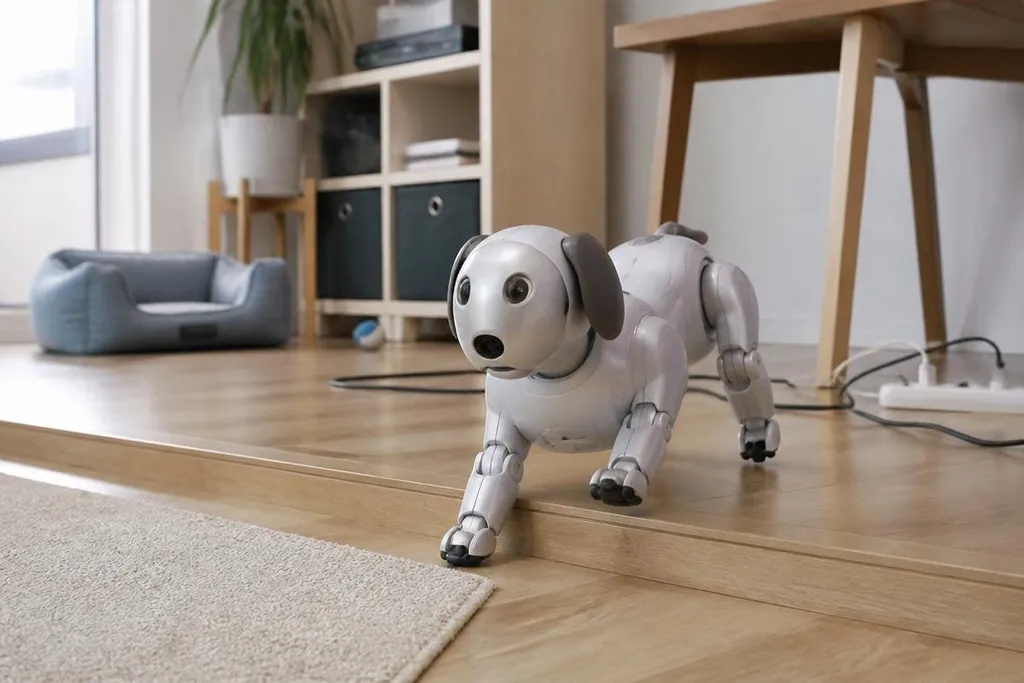
Robot pets need stable movement on the surfaces people actually have at home. A smooth floor is an easy test; rugs, door thresholds, loose cables, and small steps place different demands on motors, sensors, and control software.
A useful report should state the surface, the task, and the number of attempts. “The robot can climb” says little without a height, an angle, or a record of failed runs. The same rule applies to running, turning, sitting, and recovering after a fall.
Legged robots also need to manage heat and wear. A pet that moves well for five minutes may behave differently after an hour of repeated turns. Any claim about a major movement advance needs a test period long enough to show that change.
Battery life decides daily use
Play depends on power. Frequent charging can leave a robot pet beside the outlet for much of the day, even if its movement looks good in a short video.
Future reports should give battery size, charge time, play time, and the task used during the test. Idle time and active motion place different loads on a battery, so one runtime number cannot describe the whole product.
Charging also affects safety. A home robot needs a clear way to stop movement near people, pets, and furniture. The charging dock should stay stable when the robot approaches it, and the robot should show what happens when the dock is blocked.
A safe dock still says little about how a robot pet acts around people. Reports from Robot 24 can tie social behavior claims to a named robot, test setting, and date before you judge the next feature.
Social behavior needs proof
Touch, sound, or movement may draw a response from a robot pet. Those features matter only when the response stays useful outside a scripted demo.
The test should cover noise, poor lighting, several people in the room, and repeated commands. It should also show how the robot handles a command it cannot follow. A clear refusal is safer than a confident action that sends the robot into a table leg.
Learning claims need the same care. A product may change its response after repeated interaction, or it may rely on a fixed set of programmed actions. Those are different systems, and buyers need to know which one they are getting.
Privacy belongs in the same section. Cameras, microphones, cloud services, and stored recordings can affect where a robot pet fits in a home. A product page should state what data leaves the robot, how long it stays there, and whether the owner can delete it.
How to judge the next announcement
Before treating a robot pet as a major step, check these points:
- Find the test setup. Look for surfaces, lighting, task length, and failed attempts.
- Check the price. Include the robot, charger, subscription, replacement parts, and shipping.
- Read the safety details. Look for stop controls, obstacle handling, heat limits, and safe charging.
- Separate learning from scripts. Ask whether the robot changes its behavior or selects from fixed actions.
- Check the data path. Find out which sensors record information and where that information goes.
These checks also show why the next useful breakthrough may arrive in a less visible part of the product. Better recovery after a fall, longer battery life, quieter motors, or easier repairs could matter more at home than a new trick in a short video.
I'd wait for published test details before calling any robot pet a real advance. The deciding evidence will be plain: how long it runs, how often it fails, what it costs to keep, and what it does with the data it collects.