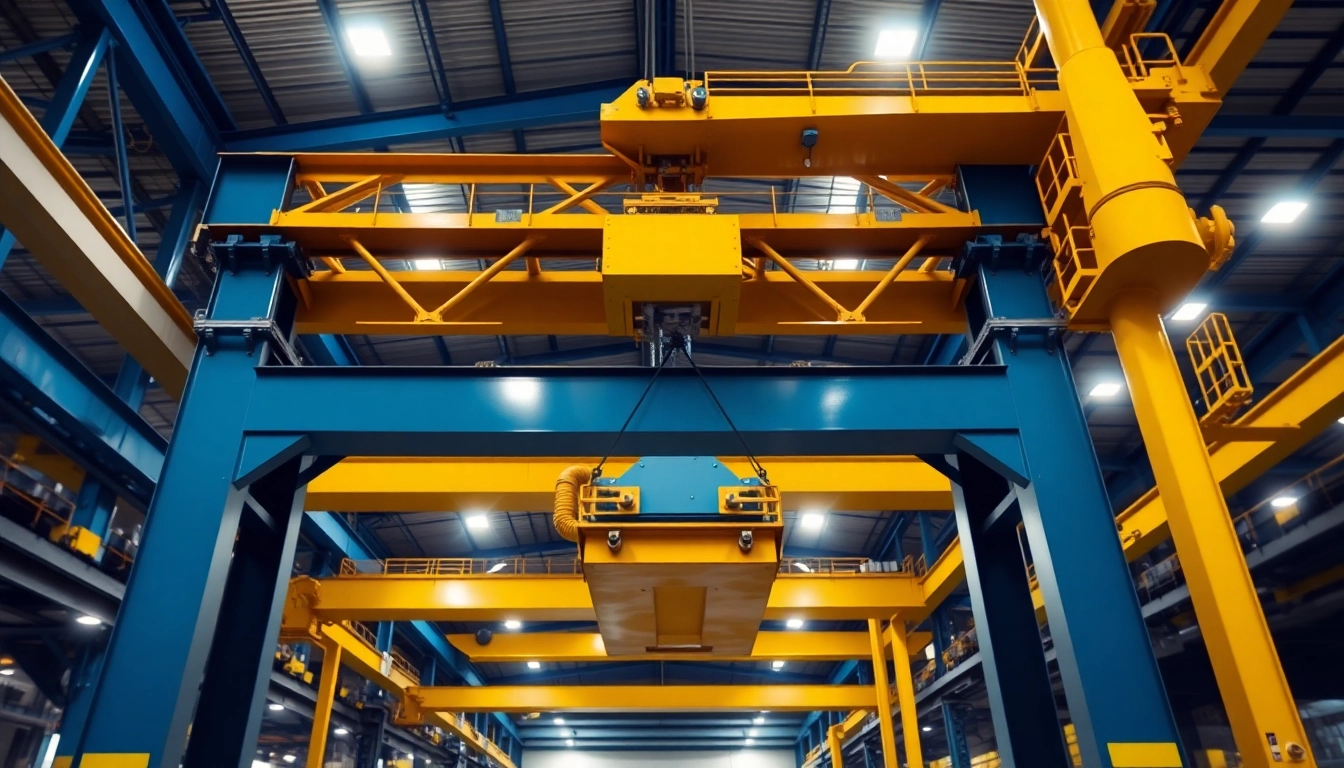
Understanding Double Girder Bridge Cranes
In the world of material handling, double girder bridge cranes stand out for their superior capability and flexibility. These powerful machines are specifically designed to lift and move heavy loads across vast spans, making them invaluable in various industrial settings. The dual-girder configuration allows for enhanced stability and load distribution, which is essential for operations involving heavy machinery or substantial materials. As businesses strive for efficiency and safety, understanding the functionality and benefits of these cranes has never been more critical.
Definition and Functionality
A double girder bridge crane comprises two parallel girders that are supported by end trucks, which enable horizontal movement along the overhead runways. This design not only provides increased load capacities but also enhances the crane’s height of lift compared to single girder models. The hoist mechanism typically travels on the lower flanges of the girders, allowing for a more compact design and greater hook height. This makes double girder cranes particularly beneficial in facilities with height restrictions or where maximizing lifting capacity is essential.
Comparison with Single Girder Cranes
When comparing double girder and single girder cranes, the primary distinctions lie in their design and operational capabilities. Single girder cranes consist of only one girder, which limits their load capacity and increases the need for support structures. In contrast, double girder cranes offer:
- Increased Load Capacity: Able to lift heavier loads due to the dual support system.
- Enhanced Stability: The width between girders provides better stability and resistance to lateral forces.
- Greater Hook Height: More lifting height compared to single girder cranes.
These advantages make double girder cranes the preferred choice for industries that require heavy lifting, such as steel manufacturing, logistics, and construction.
Applications in Various Industries
Double girder bridge cranes are versatile tools employed across a range of industries. Here are some notable applications:
- Manufacturing: Used in assembly lines for lifting heavy components.
- Construction: Essential for moving heavy materials on job sites.
- Shipping and Logistics: Perfect for loading and unloading cargo in warehouses.
- Aerospace: Cranes are vital for assembling aircraft components due to their heavy weight.
As industries evolve, double girder cranes adapt to meet specific operational needs, reinforcing their significance in modern material handling.
Key Advantages of Double Girder Bridge Cranes
Superior Load Capacity and Stability
The primary benefit of double girder bridge cranes is their superior load capacity. With designs that can handle loads exceeding 10 tons, these cranes are engineered to undertake the heaviest tasks with ease. Their stability is a crucial factor, especially in dynamic environments where equipment requires precision handling. The broader distance between girders minimizes sway and enhances control during operations.
Space Utilization and Design Benefits
One of the often-overlooked advantages of a double girder design is its ability to utilize vertical space efficiently. By allowing the hoist to operate on the lower flange of the girders, these cranes maximize hook height while minimizing the required floor space. This configuration is particularly beneficial in warehouses with limited vertical clearance or when creating a multi-tiered operational setup.
Cost-Efficiency in Long-Term Operations
While the initial investment in a double girder bridge crane may be higher than that of a single girder crane, the long-term cost savings justify the expense. The durability and robustness of double girder cranes reduce maintenance costs and extend the lifespan of the equipment. Furthermore, their ability to handle higher loads decreases the need for multiple machines, resulting in reduced operational costs over time.
Choosing the Right Double Girder Bridge Crane
Factors to Consider During Selection
When selecting a double girder bridge crane, several factors must be taken into account to ensure the right fit for your operations:
- Load Capacity: Determine the maximum weight that needs to be lifted.
- Span Length: Evaluate the distance that the crane will need to travel.
- Height of Lift: Consider the vertical space available and the height needed for operations.
- Environment: Assess whether the crane will operate indoors, outdoors, or in special conditions that may require weatherproof solutions.
Common Mistakes to Avoid
Choosing the wrong crane can lead to significant operational inefficiencies. Common mistakes include:
- Underestimating load requirements, leading to crane overloading.
- Ignoring environmental factors that could affect crane performance.
- Failing to consider future operational needs that may evolve as the business grows.
To avoid these pitfalls, it is essential to conduct a thorough analysis of current and future operational requirements.
Consulting with Industry Experts
Engaging with industry experts can significantly enhance your choice of crane systems. They can provide insights into:
- Latest technology trends.
- Customized solutions for unique operational needs.
- Best practices for installation and maintenance.
Leveraging expert advice ensures a well-informed decision that aligns with your company's strategic goals.
Future Trends in Crane Technology
Innovations in Smart Crane Technologies
As technology advances, so do the capabilities of double girder bridge cranes. Innovations such as smart cranes, which integrate IoT (Internet of Things) technology, enhance operational efficiency. These smart systems enable real-time monitoring of crane performance, predictive maintenance, and optimized operational workflows, leading to reduced downtime and increased safety.
Impact of Automation on Operations
Automation is rapidly shaping the future of material handling. Automated double girder cranes are becoming increasingly prevalent, allowing for:
- Increased Efficiency: Automation streamlines processes and reduces human error.
- Enhanced Safety: Automated systems limit operator exposure to dangerous conditions.
- Data-Driven Insights: Automation provides valuable data that can improve operational decision-making.
Environmental Considerations and Sustainability
As industries become more environmentally conscious, cranes are evolving to meet sustainability demands. Innovations include energy-efficient designs and eco-friendly materials that reduce the carbon footprint of crane operations. Companies are increasingly investing in sustainable crane technologies as part of their commitment to minimizing environmental impact.
Maintenance and Safety Practices
Regular Inspection and Maintenance Tips
Regular maintenance of double girder bridge cranes is crucial for ensuring safety and operational efficiency. Key practices include:
- Conducting frequent inspections to identify and rectify issues promptly.
- Adhering to manufacturer maintenance schedules for timely servicing.
- Keeping detailed maintenance records for tracking performance and compliance.
Safety Protocols in Crane Operations
Establishing comprehensive safety protocols is essential in crane operations. Important protocols should cover:
- Proper training for crane operators to ensure competency.
- Implementing weight limits and ensuring that loads are properly secured.
- Routine safety drills to prepare for emergency situations.
Training Requirements for Operators
Investing in operator training enhances safety and operational efficiency. Key areas of focus should include:
- Understanding crane mechanics and functionality.
- Best practices for load handling and positioning.
- Emergency response strategies for operational safety.
By providing thorough training, companies can dramatically reduce the risk of accidents and improve overall productivity.